Forward deployed in London
Internship: May. 2025 - Aug. 2025
Oct. 17, 2025 • 0 views
Preamble
The forward deployed role is definitely an unusual one. I first heard about it about a year ago, when B, my team lead at our university club Blueprint, announced he was joining Palantir. At the time, I didn’t know what Palantir was—I’d heard the term in Lord of the Rings, but B didn’t exactly strike me as an actor. So when he told me, “I’m a forward deployed software engineer at Palantir,” I only really understood the “software engineer” part. He went on to explain that Palantir is a software company, with roots in government and defence work, hence the term “forward deployed”, a nod to its military origins. Unlike traditional software engineering, being forward deployed means you are interfacing with clients directly.
For B, the forward deployed role helped highlight his “product-first” interest. Coding was a means to an end for him and served as a powerful tool to deliver products to customers. This resonated with me a lot at the time, since most of my tech involvement outside of work revolved around building tools for clients, whether it be Hack the North participants or members of the Children’s Aid Society. Forward deployed seemed to combine the world of business and tech, catering towards technical individuals who also enjoy communicating with their users.
I didn’t think much about Palantir for the next year. I went on to complete internships at Faire and ETHGlobal, both of which were incredible experiences that taught me a great deal about myself. Faire was structured in a more traditional software engineering way, whereas ETHGlobal embodied the startup culture of “ship often, ship fast”. After completing both internships, I was looking for something in between—a company with structure, but enough flexibility to let me work on problems I find interesting. Fortunately, Palantir does exactly that. And, after a little persuasion from B, I decided to apply and kick off the interview process. A few months later, I found myself packing my bags, ready to board my flight to London and kick off my internship as a forward deployed software engineer at Palantir.
Interlude
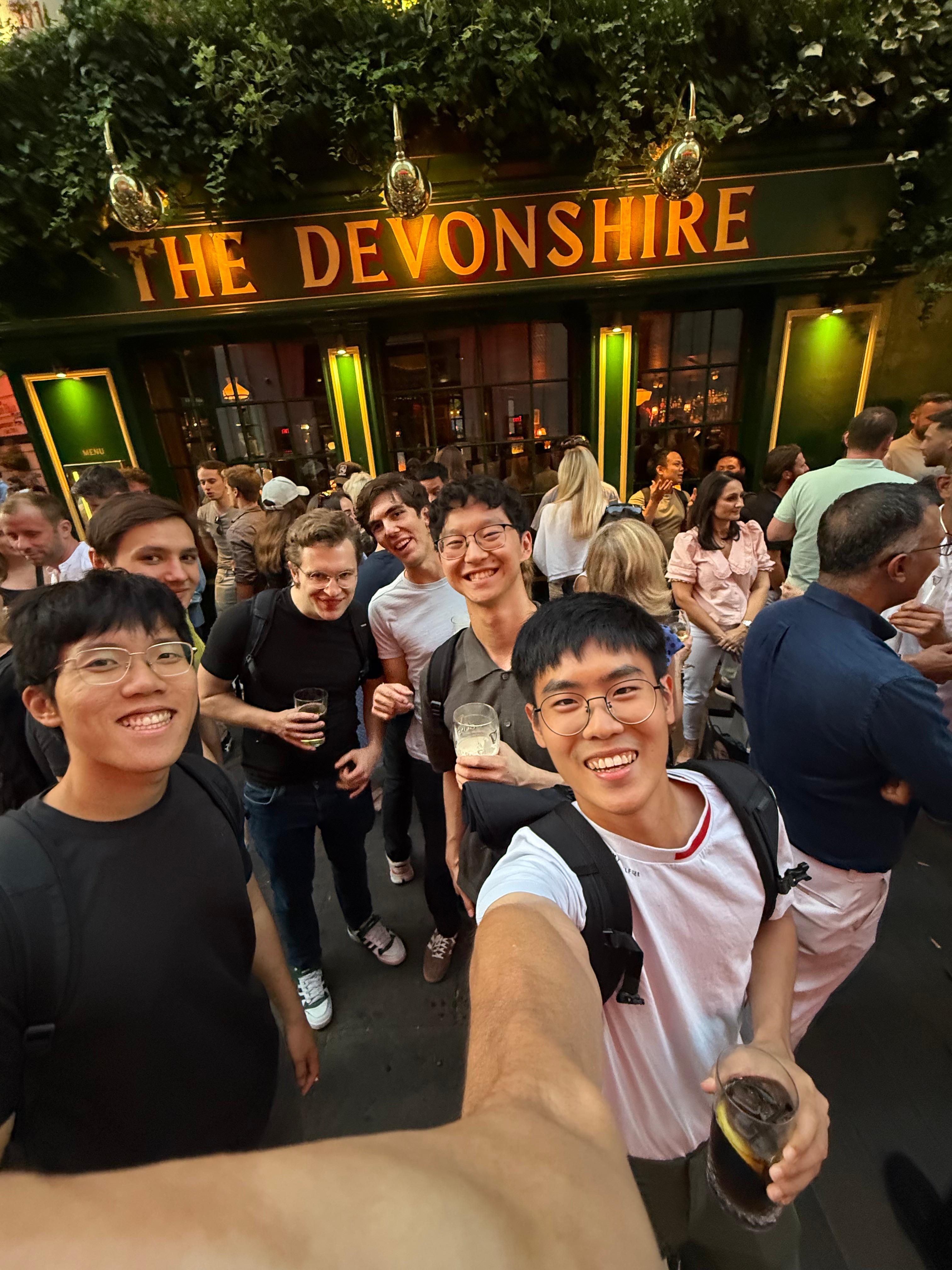
Before I talk about the work, let me describe the city itself. London, man. What a city. I felt like Harry Potter entering Hogwarts when I stepped out of the train station. Looming above me was the most dastardly-looking clock tower I’d ever seen. Its dark orange exterior cast a sinister glow onto the streets below. Modelled after the town hall at Armentières in north-eastern France, this tower reflected the Victorian style design, a Gothic Revival.

The unique part about London is that the St. Pancras Clock Tower was one of many architectural wonders in the city. The closer you get to the city centre, the more landmarks you see. In certain areas, I couldn’t walk 5 minutes without seeing a new sight.
London is (allegedly) quite a rainy place, especially during the summer season. Fortunately for me, though, it didn’t rain nearly as much as people had forecasted, and I got plenty of sunshine to explore all around. In contrast to some other major cities, London has a lot of greenery. Specific highlights for me were Hyde Park and Victoria Park, which were super nice to bike around. I also had the chance to explore cities outside of London, such as Oxford, which is very castle-like and has a strong Harry Potter theme. Actually, I couldn’t help but notice that England itself has a lot of Harry Potter references. For one, my Airbnb was located just a five-minute walk from Platform 9¾. Walk a few minutes west and you’ll find the British Library, which holds a collection of Harry Potter books and related items, including early drafts! And of course, there are Harry Potter-themed shops everywhere, including one just a few minutes from my workplace. At first, it was a fun novelty, but when the crowds start blocking your way to work every morning, it becomes a bit less charming. After all, I write code, not spells.
The work
Going into the first day, I still wasn’t too sure what the difference was between a software engineer and its forward deployed variant. However, I soon realized that they are completely different roles. Let me break them down.
A software engineer (also referred to as “devs” internally) at Palantir can work on one of four products/services: Foundry, Gotham, Apollo, or internal tooling. Foundry is the main platform that Palantir provides to its commercial clients. You can think of Foundry like a Google Workspace or Microsoft 365, but specifically for data integration. As Palantir calls it, Foundry is “The Ontology-Powered Operating System for the Modern Enterprise”. Gotham is Foundry’s counterpart for government clients. It is very similar to Foundry, but comes in dark mode by default (presumably because it feels more... classified). Apollo was a product built to manage the rapid growth of software like Foundry and Gotham. It does this by orchestrating hundreds of microservices to enable quick deployment updates and also provides full visibility into your deployment landscape. Think of it as the infrastructure layer that supports Palantir’s software. Finally, the internal tooling team builds and maintains tools, libraries, and platform infrastructure to support other Palantir devs. The day-to-day of a dev will vary depending on the team. Devs working on Foundry could be dealing with the backend and frontend aspects of the product or wrangling with the Ontology storage at the database level. On the other hand, devs on Apollo may find themselves scrounging CI/CD logs and debugging Kubernetes clusters. One of the benefits of Palantir is that team changes are common and even quite encouraged, so devs are free to explore their interests to the fullest.
A forward deployed software engineer (also referred to as “deltas” internally) at Palantir works on top of either Foundry or Gotham. Deltas should have a deep understanding of the suite of tools provided and leverage them accordingly based on the client's use case. A big part of the job involves communicating with the client, figuring out where their problem areas lie, and how Foundry (or Gotham) can be used to address these problems. The way deltas tackle problems depends on a few factors:
- How big the client is. The client is paying for Palantir’s services and engineers afterall, so the solutions built may be restricted by budget. For instance, deltas working with a larger client might consider implementing a development, staging, and production environment on Foundry. This might not be feasible for smaller clients, as each environment has its own objects and resources that incur compute costs.
- What the timelines look like. Some projects are more time-critical than others. Sometimes the client might ask to see a minimum viable product (MVP) the week before a quarterly conference. Other times, you may be given up to a year to develop a fully functional and presentable product. As a delta, it is up to you to scope out features and consider scalability in light of a deadline.
- The current state of Foundry. In an ideal world, Foundry is fully developed and has a tool for every use case. Although Foundry is a lot more mature than it was a decade ago, there is still a lot of new development being undertaken. Thus, deltas must make tradeoffs between various tools as they progress through different stages of development.
Ultimately, these three factors stem from a delta's understanding of Foundry. The more comfortable you are with Foundry, the better a delta you become. To grow their understanding of Foundry, deltas are also encouraged to jump between clients. As such, deltas have the chance to work in numerous different industries and learn how to leverage Foundry to solve problems in each respective space.
I had the opportunity to work in the insurance and retail industries, as well as a brief stint on a core product team within Palantir, too.
Insurance
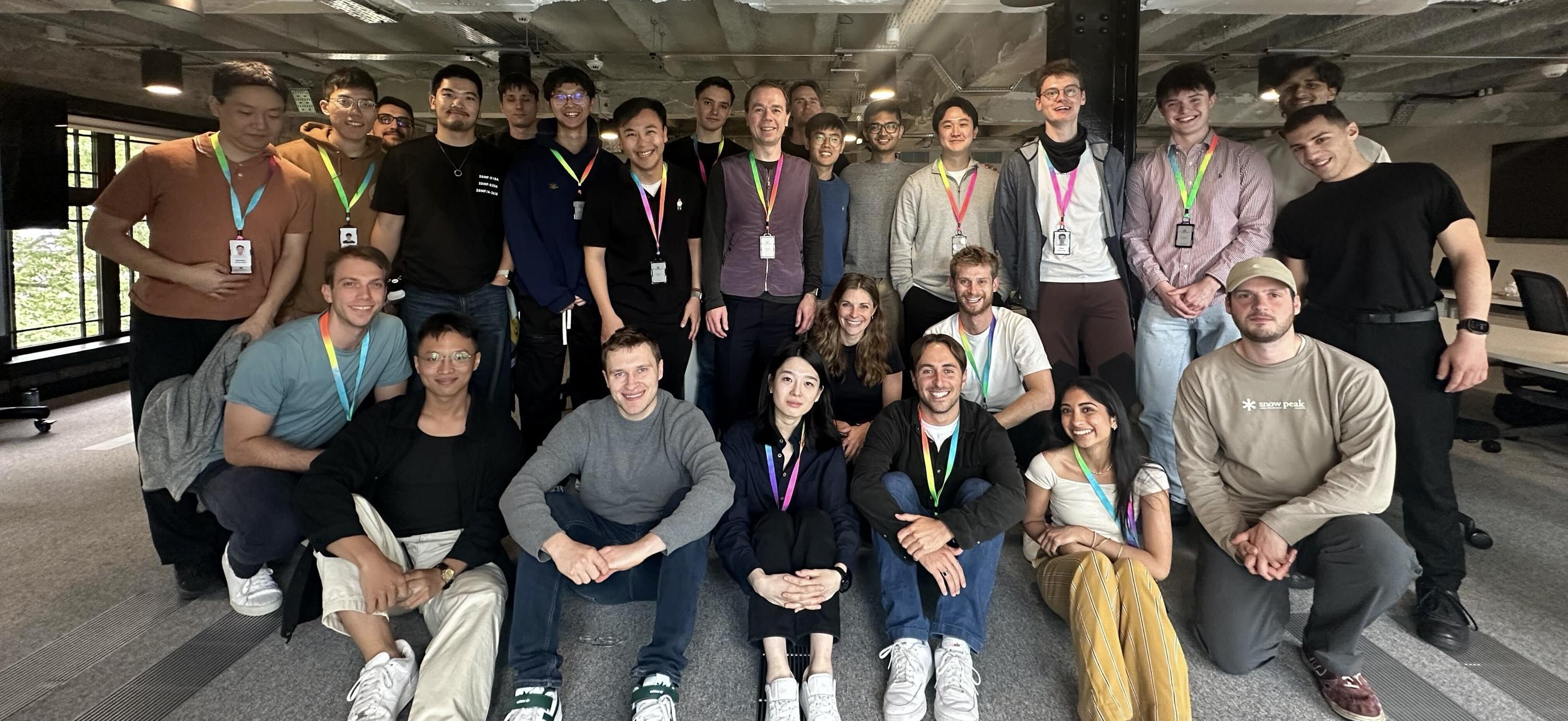
Palantir for insurance is relatively straightforward. Most problems fit into the following framework: the user (brokers, underwriters, etc.) passes data (policies, claims, etc.) to Foundry and expects to receive back information (dashboards, interactive apps, agentive answers, etc.). Ultimately, Foundry is used to streamline processes within insurance, allowing relevant users to focus on analysis rather than tedious, repetitive tasks. For me, the most interesting part of the work was watching how Palantir’s deltas go about their work. One of the biggest things that stood out to me was how different each delta on the team was. My mentor, for instance, was a very technical delta. He spent most of his time building with Foundry and tried to limit the number of meetings he had a day, only conversing with clients on technical discussions. He has a very strong understanding of the platform and often fixes Foundry bugs by diving into the Palantir codebase himself. On the other hand, there are other deltas that spend most of their time in a managerial position. They are often in meetings, whether it be with clients or syncs with other deltas, and spend a lot of time discussing the type of product to be built. These deltas focus more on the high-level, keeping track of delta progress and maintaining a good relationship with the client. It’s super interesting to me how flexible the delta role is. There is no limit to what type of delta you want to be, as long as you’re making an impact.
The highlight of my time in insurance was the opportunity to travel to Zurich, Switzerland, for our quarterly client conference. This was a 2-day event where Palantirians presented fancy metrics, discussed KPIs, and other fancy schmancy but frankly boring topics to showcase Foundry’s capabilities. Although I didn’t do much except dress nicely at this conference, it’s trips like these that really highlight a delta’s importance. Although the statistics are boring, they make it extremely clear how significant an impact Foundry has on its insurance processes. That, combined with some flashy in-person demos, really showcases the power of Palantir: going from nothing to a fully fledged application in under four months. And this is truly only made possible because of the forward deployed model. Think about it like a Korean BBQ restaurant. A typical KBBQ place will provide the meat and expect the customer to cook it properly. However, some restaurants provide the option for their staff to cook the meat for you, guaranteeing a tasty sear in every bite. The latter is how Palantir operates and is the key to Foundry’s growing adoption and success.
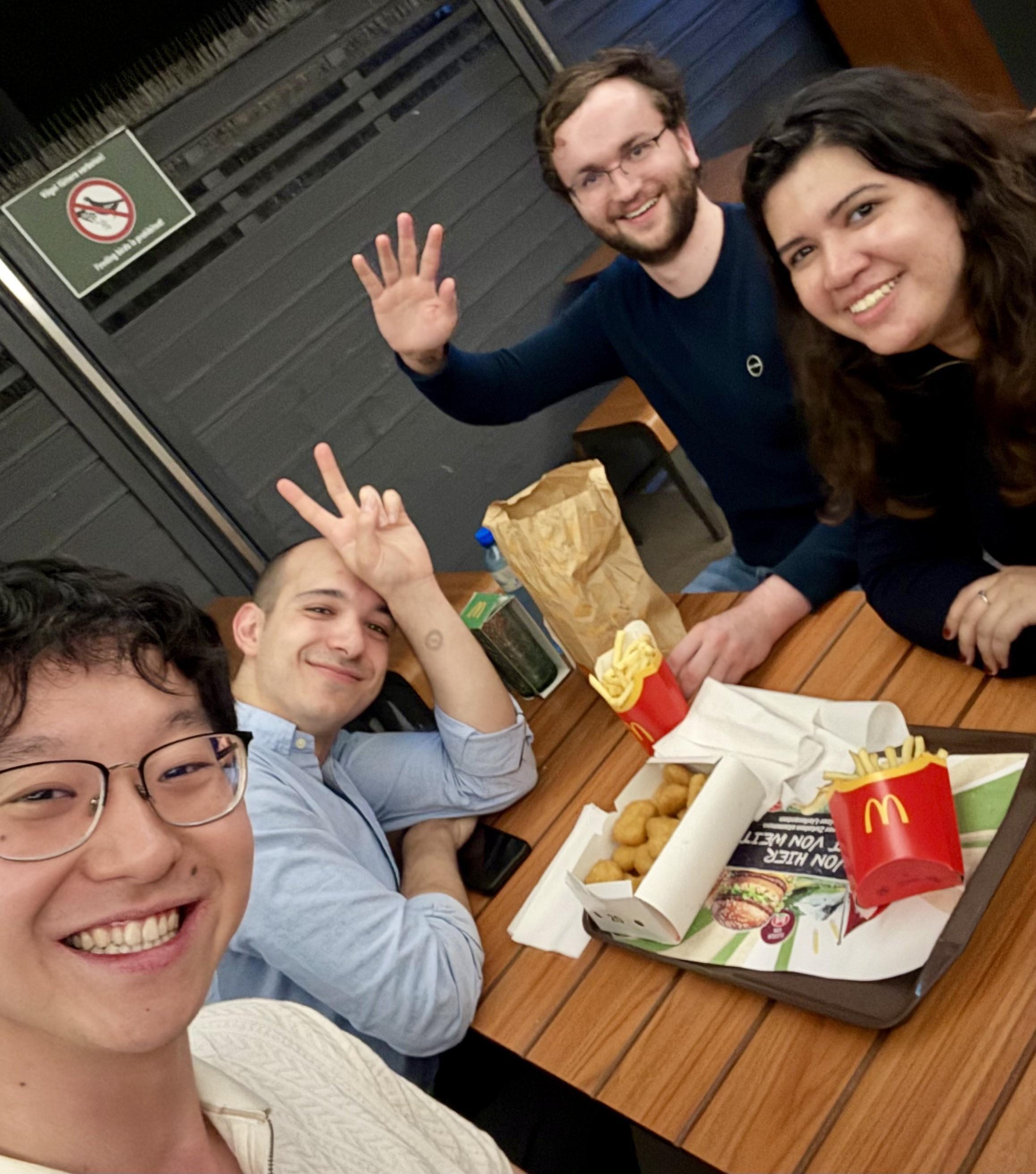
Also, another cool thing about conferences is that sometimes they go overtime, which gives you an excuse to convince your team to go on a late-night McDonald's run :v)
Retail
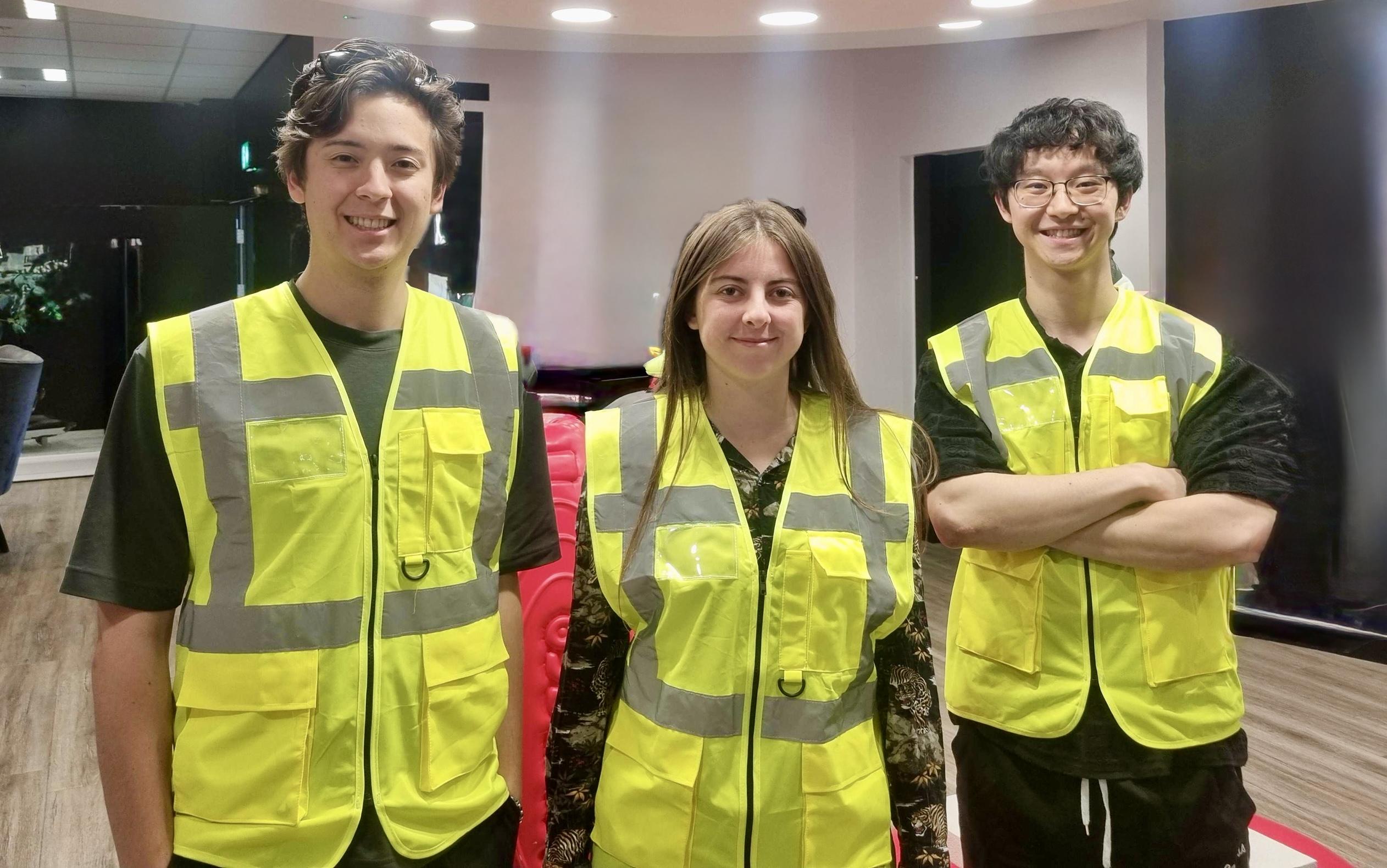
When I enrolled in a computer science program, I never would have thought that I would learn how to package shoe boxes in a warehouse, but here I was, packaging shoe boxes in a warehouse in Northern England. This particular company was not actually a client yet, and it was my job to seal the deal. To do so, I had to think like a retail company, and that meant getting my hands dirty, literally. My hands smelled like cardboard for hours.
Working in retail was quite fascinating. I didn’t have any prior retail experience, so it was really cool getting to learn the lifecycle of a product, from the manufacturing process to how they were stowed on shelves in stores worldwide. This particular company owned a warehouse in Northern England and invited me and a few other deltas to come and take a look. And wow, was there a lot to look at. The warehouse was huge, with rows upon rows of boxes, all neatly packed together into a tight grid. These boxes were stacked high, too, up at least two stories. The building also stretched for miles on end horizontally; I couldn’t even see the end from where I was standing. As my eyes adjusted to the grandeur of it all, my ears also picked up the loud humming of the automation. All around me were small robots, moving back and forth, all assigned their own little tasks. Some would pick up and move boxes around, others would push boxes onto forklifts to be carried to another part of the warehouse. And the conveyors. They were everywhere, going up and down, snaking left and right. The space not covered by boxes was filled with conveyors, transporting thousands of boxes to who knows where. I was surprised by just how much automation there was. It makes me wonder what inventory and distribution will look like in another ten years.
Of course, I didn’t just package boxes. After getting a tour of the warehouse, the prospective client explained their troubles with analyzing busy warehouse hotspots. They were currently staffing each shift in the warehouse and allocating workers manually if a shift was understaffed. Essentially, they needed a way to observe the busyness of a shift over time and assign the correct number of staff per shift. I won’t get into the nitty-gritty of the problem, but there were a few tools on Foundry that helped us configure a quick MVP for their use case. Overall, it was really cool to listen to the warehouse workers and learn more about inventory distribution. In many ways, I found myself being a translator of sorts—figuring out how to translate their terminology and day-to-day challenges from the warehouse floor and turning them into integrable solutions within the Foundry Ontology.
Degens
After spending some time working in insurance and retail, I started to miss working in tech. Sure, you could argue that building in Foundry should count, but I missed collaborating with techie people. So, I decided to pivot and got an opportunity to work on one of Palantir’s core products: Foundry Machinery. Typically, deltas don’t work on core product. However, there is a small group of deltas that, a few years ago, were tasked with building 0-to-1 products that didn’t exist yet. These products were eventually integrated into Foundry itself and are now available as one of the many tools within the Foundry suite. This group of engineers, who didn’t fit into the traditional role of a delta, was dubbed “the Degens”. I would like to think the word was derived from the computer science term “degenerate”, which means a simpler/non-generic case of a structure or problem. In this case, the “forward deployed software engineer” degenerates simply into a “software engineer”. Unfortunately, the word “degen” also has a more commonly used slang term with negative connotations. I’ll stick with the first definition.
I had the opportunity to experience what it’s like to work as a Degen through Foundry Machinery. Machinery is a service on Foundry that provides a visual representation of your automated jobs. This is especially helpful if you are chaining automations or calling some automations in sequence versus in parallel. Machinery helps you understand and manage all aspects of your chained automations. We also had another service on Foundry called Marketplace, which, as the name suggests, is a platform for users to market their Foundry product for others to install. However, Foundry offers a variety of services, and not all of them are marketplace compatible. My job was to make sure that was no longer the case for Machinery.
This task was a nice change of pace from my previous delta work. It was familiar software engineering work, but in an unfamiliar setting. After leveraging Foundry for the past two months, it was refreshing to see how it was built under the hood.
Final Thoughts
Being a forward deployed software engineer was cool. I don’t think there is a role quite like this anywhere else, although I am seeing the “forward deployed” label popping up more and more, especially in the startup scene. As amazing as the experience was, I want to reiterate that a forward deployed software engineer is NOT a traditional software engineer, to the point where I would say adding “software engineer” at the end is a little misleading. Yes, you do still build and code, but oftentimes that is not the main role of a delta. Your job is to deliver value to the client, whatever form that may be. This could indeed mean coding and building on Foundry. Alternatively, it could also involve cleaning and parsing CSV data, moving boxes between warehouses, or running errands in hospitals. As a delta, you are tackling the client’s hardest problems. But that doesn’t necessarily mean those problems have software solutions.
This experience has personally been eye-opening. It’s not every day that I get to work in insurance or retail, and it was interesting stepping away from traditional software engineering for a few months. I’m incredibly thankful for this opportunity and the wonderful people I met along the way. My experience in London has been great, and over the past three months, I’ve made friends I’ll definitely be going back to visit again someday!
As for what’s next, I’ll be packing my bags again for a 4-month semester exchange to Hong Kong :)